

The Power of Plum
Discover More in Umeboshi.
Plum

The value of ume —
passed down through time.
Ume is far more than an ingredient.
For over a thousand years, it has supported the health of the Japanese people — as medicine, as preserved food, as a quiet constant in daily life.
From "medicine" to "a warrior's sustenance" to "a place at the table" —
through every era, the value of ume has endured and been passed on.
This page is an invitation to understand ume more deeply: how it grows, how it is made, and what it holds within.
- The History of Ume
- From Ume to Umeboshi & Umeshu
- Nutrition & Health
History
The History of Ume
Ume and Japan — a thousand-year story.
More than 1,300 years have passed since ume first came to Japan. Throughout that long history, ume has supported the lives of the Japanese people in countless forms.
-
Asuka – Nara Period / 7th–8th century
Crossing the sea,
as medicine.Ume arrived in Japan around the 7th century, brought from China as a medicinal plant. In those early days, it was cultivated mainly in the gardens of the nobility and cherished for its beauty. The Man'yōshū — Japan's oldest poetry anthology — contains over 100 poems about ume blossoms, a testament to how deeply its flowers moved the people of the time.
-
Heian Period / 10th century
The first written record
of umeboshi.In the Heian period, umeboshi appears in Japan's oldest medical text, the Ishinpō. There is also a record of Emperor Murakami recovering from illness with the help of umeboshi and kombu tea (Ōfuku-cha). From this time, ume began to be understood as "medicine you eat."
-
Kamakura – Muromachi Period / 12th–16th century
Umeboshi —
a warrior's essential.In the age of the samurai, umeboshi became a battlefield necessity. Long-lasting and said to aid recovery from fatigue, it was valued as field rations — and its use spread even further through the Warring States period.
-
Warring States Period / 16th century
A small power that
sustained the battlefield.Warlords carried umeboshi as field rations on campaign. It quenched thirst, replenished salt, and kept without spoiling — small, light, and lasting. On the harsh battlefield, umeboshi was a food that kept people alive.
-
Edo Period / 17th–19th century
Finding its way
to the people's table.As ume was carried from Tanabe to Edo, umeboshi spread to ordinary people across Japan. "Ume wards off the day's troubles" became a common saying, and drinking Ōfuku-cha with umeboshi during the New Year was a beloved ritual for wishing good health and happiness. Umeboshi settled into Japanese life — not just as preserved food, but as a guardian of wellbeing.
-
Meiji – Shōwa Period / 19th–20th century
Modernization,
and an enduring value.Even as Japan modernized through the Meiji period, the value of umeboshi never dimmed. Produced in large quantities as rations during the Sino-Japanese and Russo-Japanese Wars, it later became a household staple across the country. In an age before refrigerators, umeboshi was "a side dish that doesn't spoil" — a cornerstone of the Japanese kitchen.
-
The Present / 21st century
Tradition,
and new meaning.Today, umeboshi remains an irreplaceable part of the Japanese table. From traditional sun-dried umeboshi to honey-pickled and shiso-infused varieties, the world of ume continues to expand. In 2015, the "Minabe-Tanabe Ume System" was recognized as a Globally Important Agricultural Heritage — the 400-year tradition of ume cultivation, acknowledged by the world.
Process
From Ume to Umeboshi
& Umeshu
Growing Ume
-
Feb – Mar Spring arrives, the ume blooms
While the cold still lingers, ume begins to bloom.
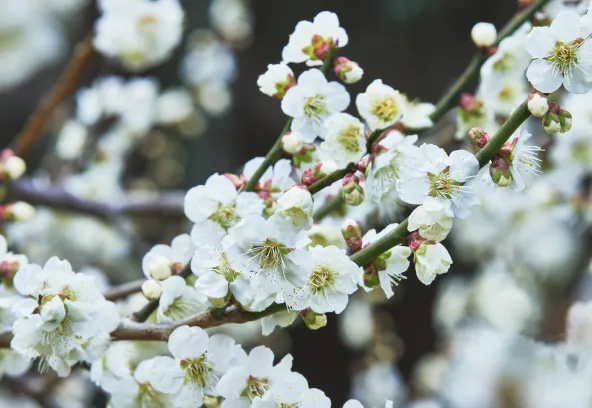
In February, white blossoms begin to open across the ume groves of Kishū, even as the cold still holds. Ume blooms before the cherry — and in this season, honeybees drift from flower to flower, carrying pollen. Each blossom, in time, will become a fruit.
-
Apr – May The fruit swells, the ume grows
Day by day, the small fruit grows.
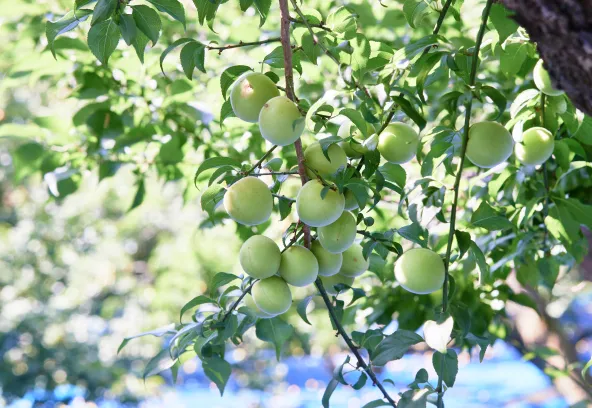
Once pollinated, the blossoms fall and small fruits begin to form. From April through May, the ume swells a little more each day. During this season, farmers are busy — weeding, watering, managing pests — nurturing the conditions for the ume to grow strong and well.
-
Jun – Jul Harvest season, fully ripened ume
Waiting for the ume to fall on its own.
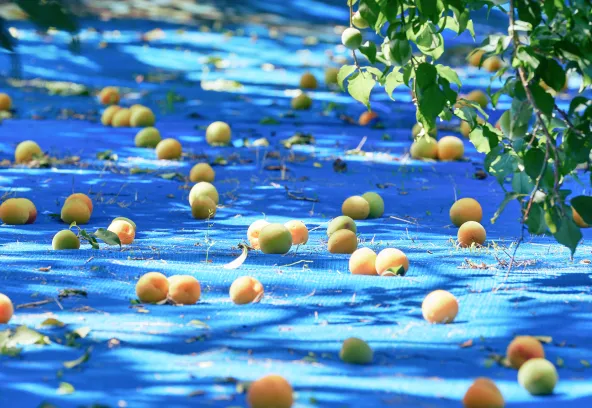
From mid-June through July, the ume reaches full ripeness. In Kishū Tanabe, the traditional harvest method is "hiroi-ume" — gathering ume that have fallen naturally from the tree. Fruit ripe enough to fall from the branch has soft, fragrant flesh: the ideal state for making umeboshi.
How Umeboshi is Made [Umeboshi Production Process]
Once harvested, the ume begin their journey to umeboshi.
Each one is carefully processed right here, in Nakamine Farm's factory.
-
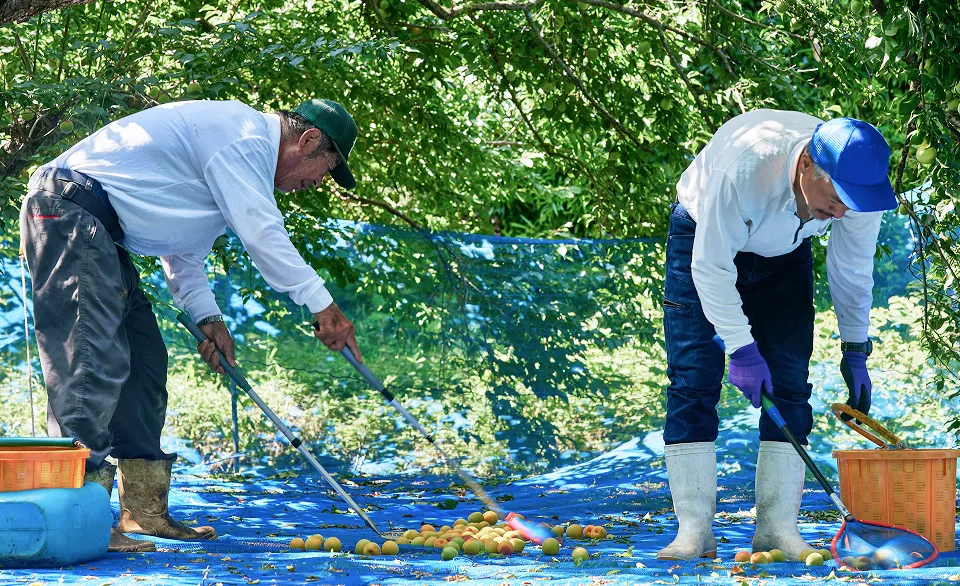
01
Washing & Sorting
One by one, with care.
Freshly harvested ume are washed right away. Each one is inspected by eye — checking for blemishes, confirming size — then sorted by grade.
-
02
Salt-Curing (approx. 1 month+)
Salt and time
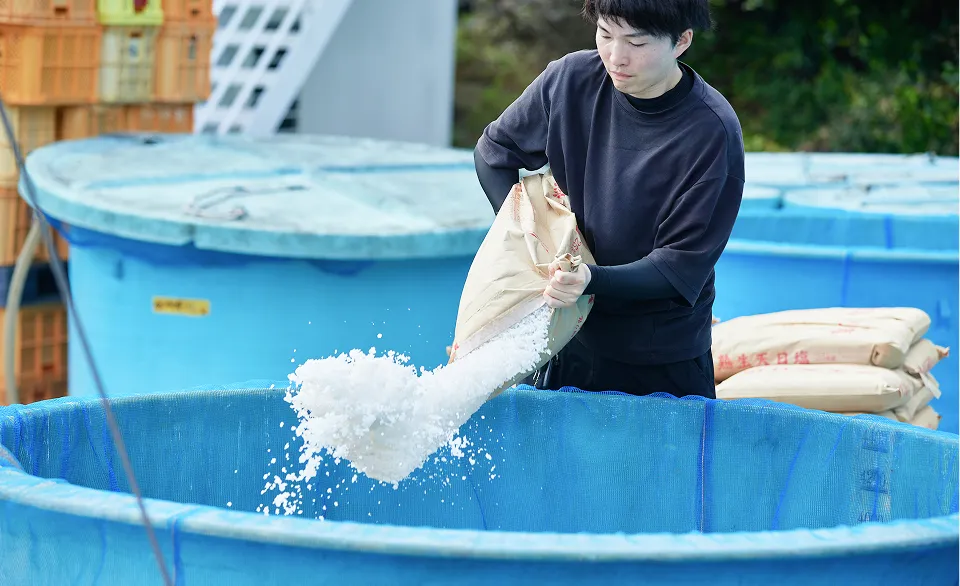
transform the ume.The sorted ume are packed with salt. Through osmosis, moisture is drawn out of the fruit and ume-zu (plum vinegar) rises up around it. In this brine, the ume rest and ripen slowly for a month or more — gradually becoming something that will keep, and something truly worth tasting.
Point
Nakamine Farm's Approach
Salt-curing is the most important step in making umeboshi.
At Nakamine Farm, we adjust the amount of salt to match the size and ripeness of each batch of ume.
The precise balance — honed over years of experience — is what draws out the ume's natural depth of flavor.
It is, quite literally, "anbai" — the very word for perfect seasoning, which traces its origins to umeboshi itself. -
03
Sun-Drying (centered on July – August)
The midsummer sun
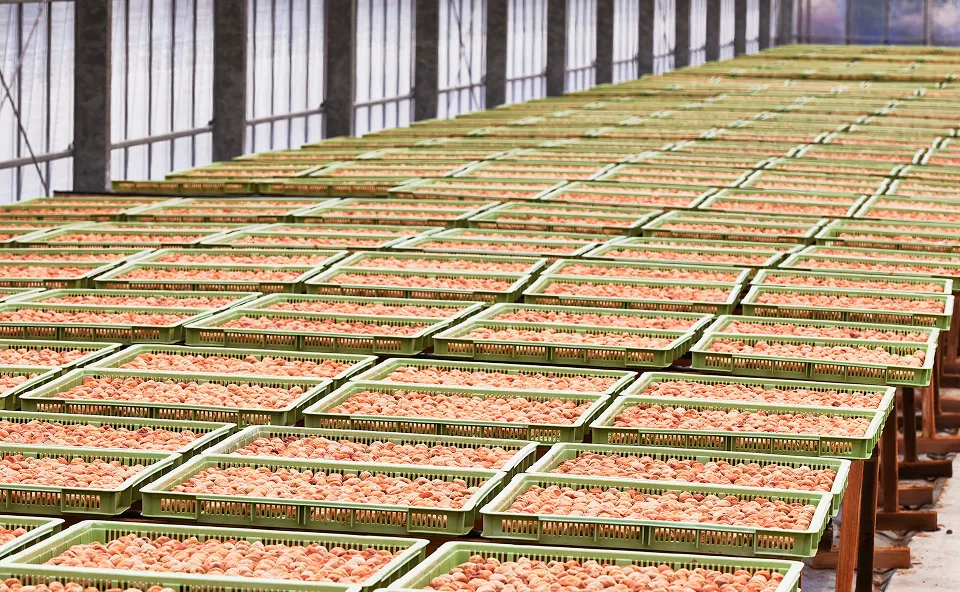
does the finishing work.After the rainy season ends, the full heat of the summer sun arrives — and this is when "doyo-boshi" takes place. The salt-cured ume are spread out to dry under the open sky. By day, the sun's heat draws away moisture; by night, the evening dew lends just enough moisture back. This rhythm, repeated over days, creates the soft texture and depth of flavor that only umeboshi has.
-
04
Storing & Seasoning
From sun-dried white ume
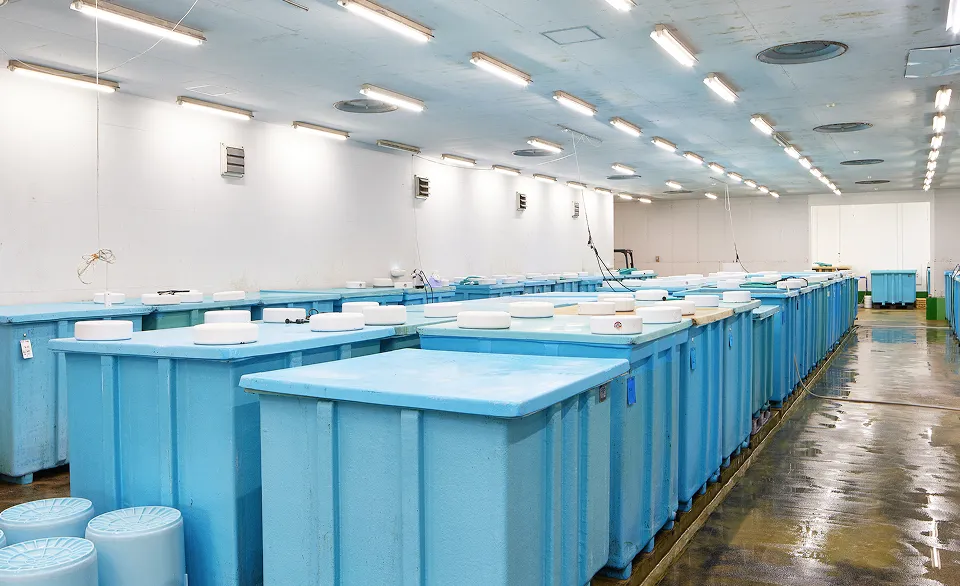
to many flavors.Once sun-dried, the ume are barreled as "shirohoshi ume" — the essential form of umeboshi. From this foundation, Nakamine Farm brings out a variety of flavors: honey-pickled, shiso-infused, katsuo, and more.
Point
Nakamine Farm's Approach
Even among shirohoshi ume, the best seasoning changes depending on the size and condition of each fruit.
At Nakamine Farm, we assess every ume individually and choose the flavor that will suit it best. Soft, yielding ume go into the honey-pickled variety; firm, tightly-textured ume become our shirohoshi. Each one is given the treatment that lets it shine. -
05
Complete
Nakamine Farm's Umeboshi
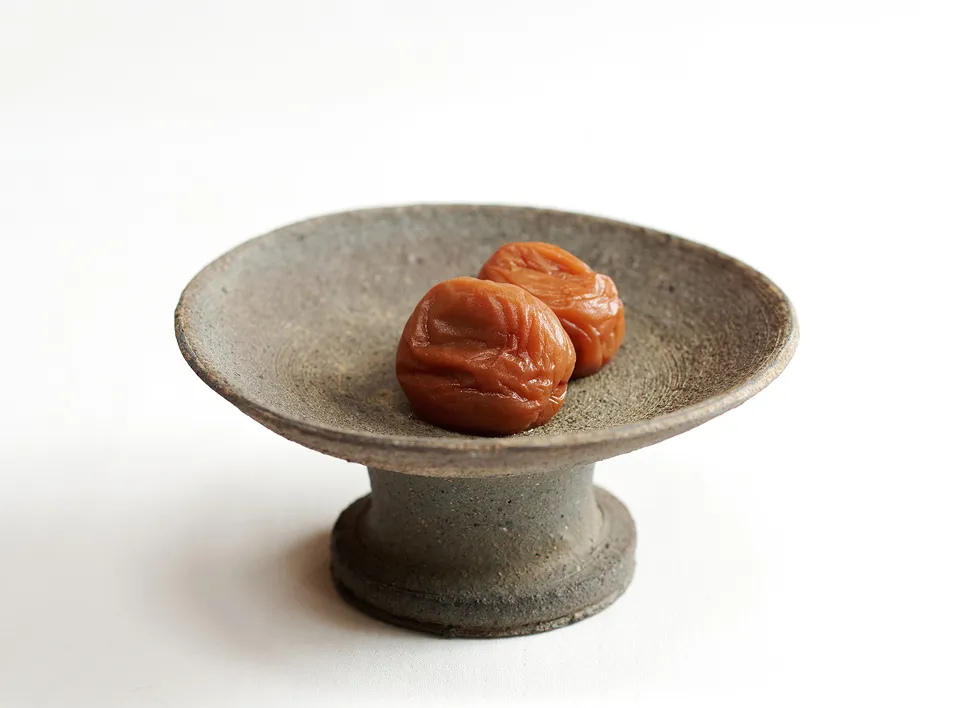
Finished with this kind of care, each umeboshi carries its own character — and finds its way to you. Traditional craft and the gifts of Kishū, held in every jar.
How Umeshu is Made [Umeshu Production Process]
Once the ume are harvested, umeshu begins.
Simple ingredients and time — that is what builds the flavor.
-
01
Sorting & Washing
Preparing the ume,
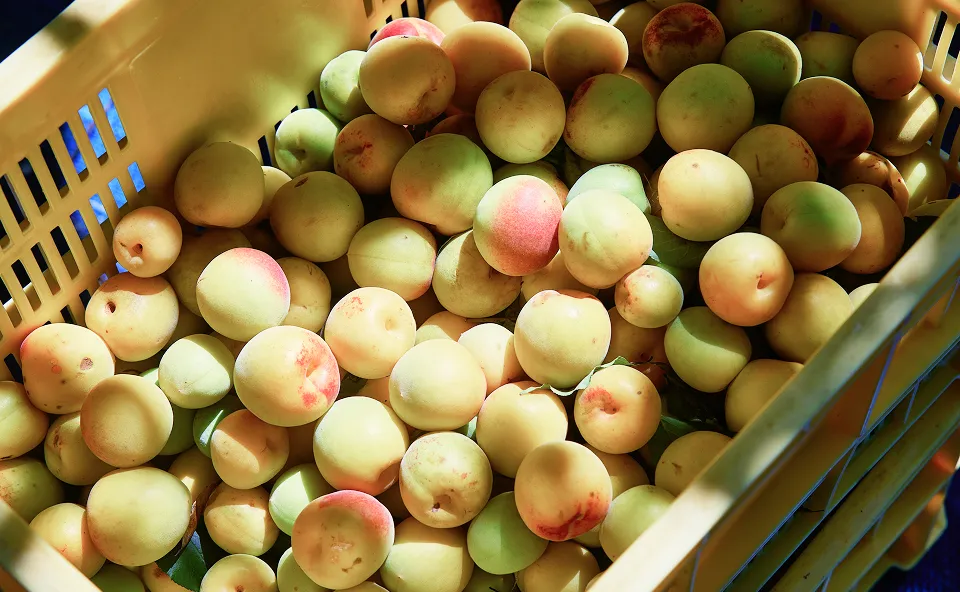
with care.The harvested ume are first sorted by size, then washed one by one to remove any impurities. Ume are fresh and delicate, so the work moves from harvest to soaking all in the same day.
-
02
Soaking
Ume, sugar,
alcohol.
And water.The ingredient we cared about most was the water.
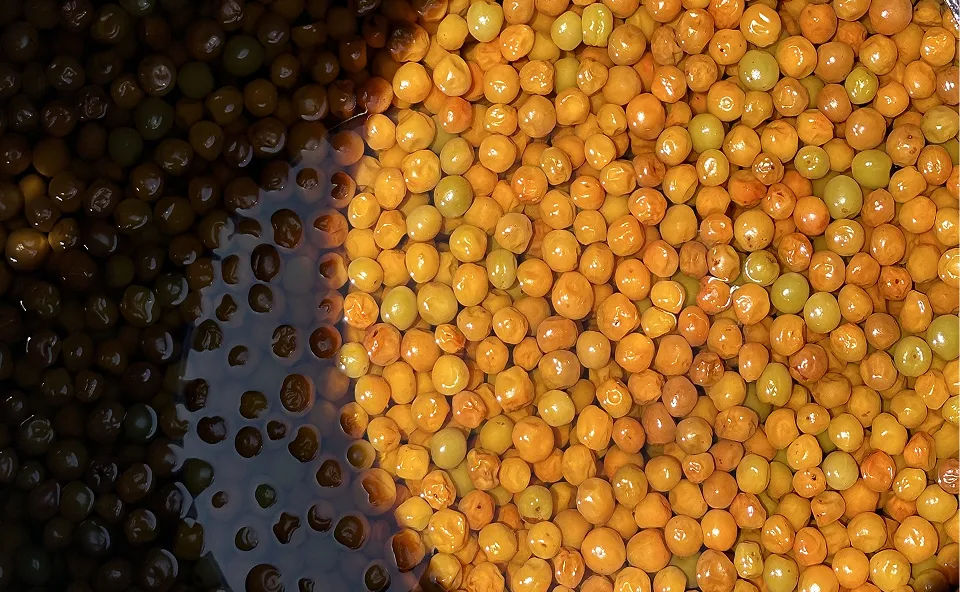
We chose natural spring water rising from the foothills of the Kumano Kodō, a UNESCO World Heritage trail. Pure and mild, this water slowly dissolves the sugar and draws the ume's rich essence from deep within. With such simple ingredients, the purity of the water is what lets the ume's natural fragrance truly come alive.
-
03
Aging (3 months – 1 year+)
Time deepens
the flavor.Once soaked, all that's left is to wait. After about three months it can be enjoyed, but with six months, a year, or more of aging, the flavor grows richer and rounder. The longer it rests, the more the ume's fragrance and depth melt into the shōchū — becoming something only time can make.
-
04
Complete
Savoring the gifts
of the ume.Slowly and patiently aged, our umeshu carries the fresh fragrance of green ume and a gently rounded sweetness. Enjoy it as an aperitif, or however you like — on the rocks, with water, or over sparkling.

Nutrition
The Nutrition of Ume
What ume holds within.
The reason umeboshi and umeshu have been loved for so long —
it isn't only the taste. It's what they carry inside.
-
Citric Acid
The tartness of umeboshi comes from citric acid — and umeboshi contains it in abundance, rivaling even lemon.
Citric acid is said to help break down lactic acid, the compound associated with fatigue, and to support the body's energy metabolism. The long-held belief that "umeboshi cures tiredness" traces back to the quiet work of this single compound.When it helps
After sport or exercise. When fatigue sets in.
When summer heat steals your appetite.- Supports recovery from fatigue
- Promotes energy metabolism
- Stimulates appetite
-
Salt & Minerals
Umeboshi contains a balanced mix of salt alongside minerals such as potassium and magnesium.
Salt is essential for maintaining the body's fluid balance — and it is especially easily lost through sweat. The mineral balance in umeboshi makes it well suited for natural salt replenishment, which is part of why the old saying goes: "An ume a day keeps the troubles away."When it helps
After sweating. For salt replenishment in hot weather. After sport or outdoor work.
- Salt replenishment (heat fatigue prevention)
- Supports fluid balance in the body
- Mineral replenishment
-
Organic Acids & Polyphenols
Beyond citric acid, ume contains a variety of organic acids as well as polyphenols — compounds known for their antioxidant properties.
These components are said to carry antibacterial and antioxidant effects, helping to protect the body. The long-held tradition of placing umeboshi in a bento box is a piece of our ancestors' wisdom, making practical use of these antibacterial qualities. Ume is also said to support digestion.When it helps
In a bento. During seasons when food safety is a concern. As part of a health-conscious diet.
- Antibacterial properties
- Antioxidant properties
- Supports digestion
-
Nutrition in Umeshu
Umeshu carries within it the citric acid, minerals, and polyphenols of the ume it was made from. Soaking ume in alcohol draws out its beneficial compounds slowly and deeply, making them easy to absorb in a form that is a pleasure to drink.
Enjoyed in moderation, umeshu is said to stimulate the appetite and ease the mind — lovely as an aperitif before a meal, or as a quiet companion at the end of the day.When it helps
Before a meal, as an aperitif. At the end of the day, to unwind.
- Stimulates appetite
- Relaxation
- Supports circulation