Our Craftsmanship

From a 400-year ume-growing region.
Nakamine Farm's Umeboshi.

About

What We Believe In

At Nakamine Farm, quality comes first — at every step, from growing ume to crafting and delivering our products.
We carefully select ume nurtured in a Globally Important Agricultural Heritage region, then process each one with a fully integrated, in-house system.
Every jar that leaves our farm is backed by an unwavering commitment to quality.

"A partner you can trust."
That feeling — in every transaction — is the quality we strive for.

As a partner supporting your business, we promise a standard of quality that never compromises.

Area

An Ume Region Recognized by the World

Tanabe City, Wakayama — a Globally Important Agricultural Heritage site.
Here, where rich nature and centuries of tradition breathe side by side, Nakamine Farm tends its ume.

Nankō Ume, Grown in the Heart of Kishū

Japan's Finest Ume-Growing Region

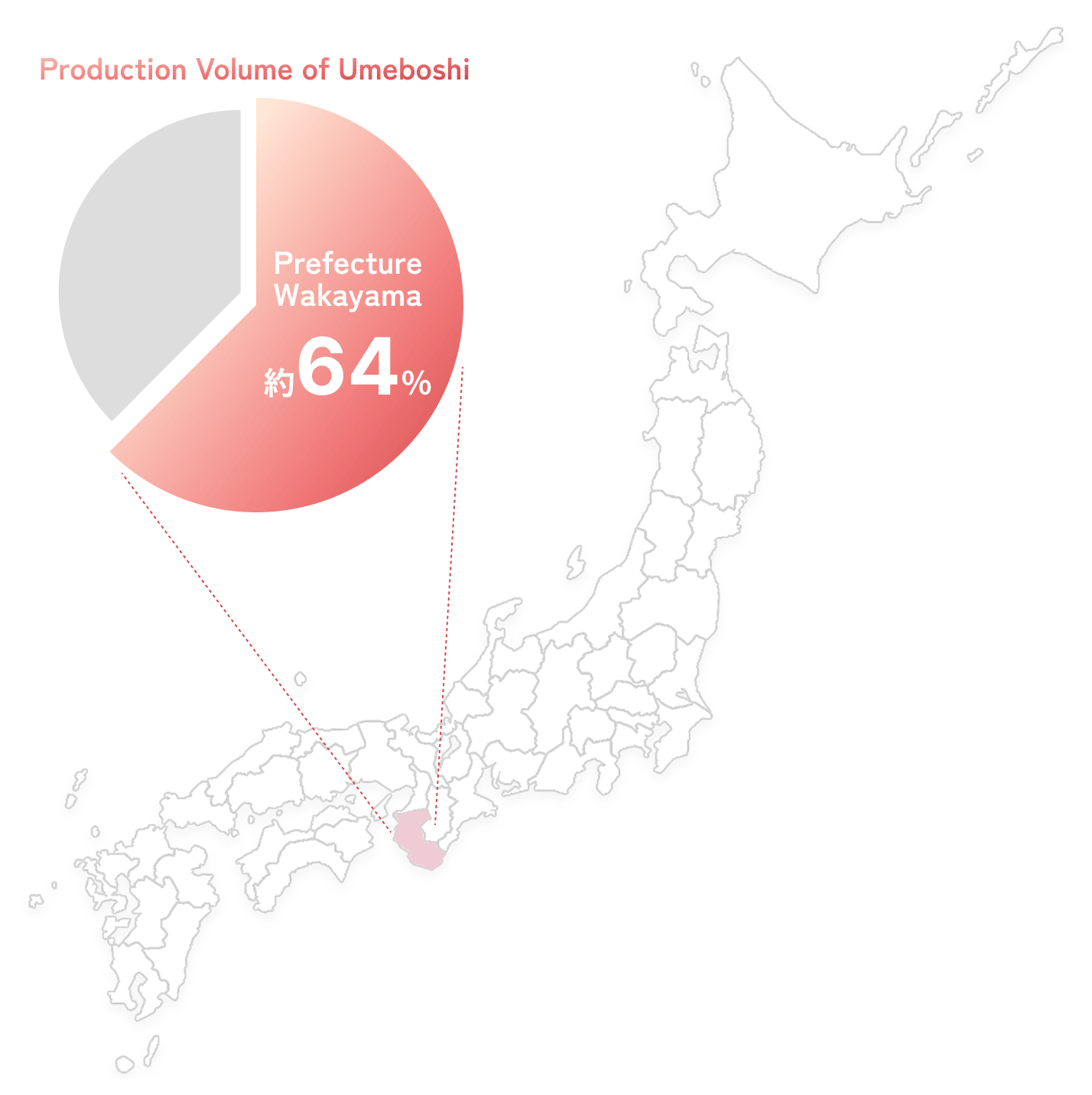
Wakayama Prefecture produces roughly 60% of all ume in Japan — making it the country's undisputed home of ume.
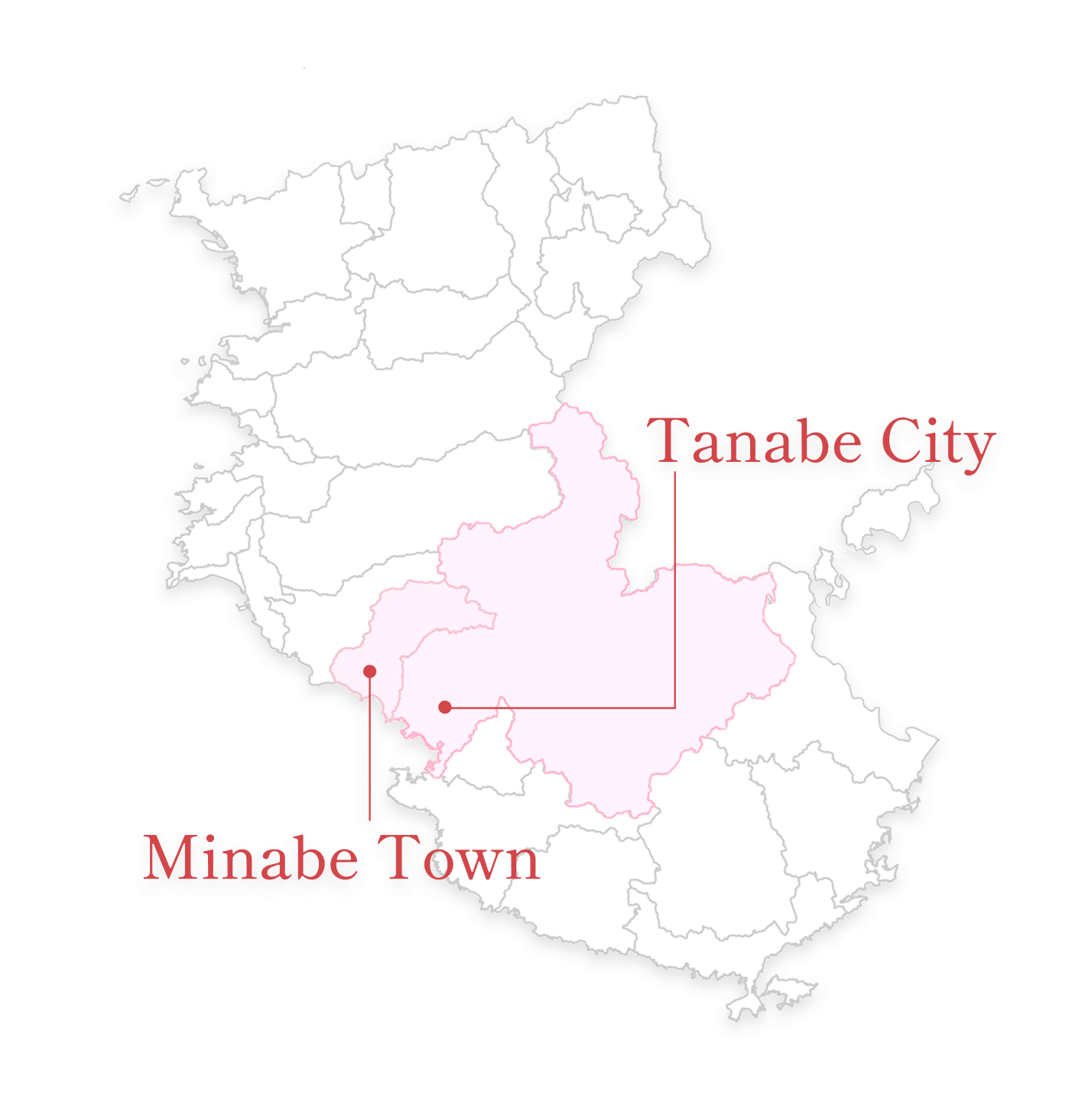
Within the prefecture, Minabe Town and Tanabe City are celebrated as the heartland of Kishū Nankō Ume.

A warm, gentle climate. Abundant sunshine.
Well-drained hillside slopes where the winters stay mild and spring light falls in long, golden hours.
It is this land — and no other — that suits ume best.

This is where Nankō Ume grows.
Thin-skinned, thick-fleshed, and deeply flavorful —
widely celebrated as the variety most perfectly suited for umeboshi.

Generation after generation, Nakamine Farm has grown ume in this corner of Kishū.
Wrapped in green mountains. Breathing clean air.
The ume raised in this nature becomes our umeboshi.

400 Years of
Ume-Making Tradition

A Globally Important
Agricultural Heritage:
"The Minabe-Tanabe Ume System"

The "Minabe-Tanabe Ume System," which includes Tanabe City, Wakayama,
was recognized as a Globally Important Agricultural Heritage in 2015.

A Globally Important Agricultural Heritage (GIAHS) is a designation awarded by the United Nations Food and Agriculture Organization (FAO)
to agricultural systems where traditional farming, biodiversity,
and regional culture exist as one.

For more than 400 years — since the Edo period — ume cultivation has continued on this land.
Ume groves spreading across mountain slopes. Forests of binchotan charcoal oak that sustain the ume.
And the quiet, daily rhythms of people whose lives are woven together with ume.

A living system — ume trees, people, and nature, coexisting together.
This long history, this enduring tradition: recognized by the world as an ume-growing region like no other.

A Climate and Land
Made for Ume

  • A Warm Climate

    Warmed by the Kuroshio Current, the winters here stay mild — a gentle embrace that lets ume trees thrive.

  • Abundant Sunshine

    Bathed in long hours of sunlight, the ume fruit grows plump and full, rich with flavor.

  • Well-Drained Soil

    The sloping hillside terrain drains easily and freely — ideal conditions for cultivating ume.

  • A Deep-Rooted History

    A tradition of ume-making stretching back to the Edo period — alive and continuing in this land today.

Commitment

Nakamine Farm's Craft

  • Commitment - 01

    Only the Finest Ume

    At Nakamine Farm, we use only Kishū Nankō Ume —
    the variety most revered for making umeboshi.

    Thin-skinned and generously fleshed,
    Nankō Ume brings a soft, pillowy texture and a flavor that is quietly, unmistakably refined.

    After harvest, every single ume is checked by hand —
    size, ripeness, and blemishes — each one assessed with care before it makes the cut.

    Three Selection Standards

    Size
    Carefully graded for consistent, uniform fruit
    Ripeness
    Selected at peak color — fully ripened to perfection
    Blemishes
    Each ume checked individually for marks or discoloration
  • Commitment - 02

    One Farm, One Vision (6th Industry)

    At Nakamine Farm, everything happens under one roof — from growing the ume to crafting the product to delivering it.
    Farming × Processing × Sales = 6th Industry.
    This fully integrated approach is the backbone of everything we stand for.

    Four strengths that only an integrated farm can deliver

    • 01

      Complete Traceability

      "Which field did it grow in? When was it harvested? How was it made?"
      Because every step happens in-house, we can trace the full story of every product — with nothing left unclear.

      When a product's origins and process are opaque, it becomes difficult for your business to speak with confidence to your customers.

      With Nakamine Farm's products, you can share the full picture — from raw ume to finished jar — clearly and with pride.

    • 02

      Uncompromising Quality Control

      Because we handle every stage of production ourselves, we can hold firm to our standards at every turn. When manufacturing is outsourced, true control over quality and process becomes difficult to achieve.

      At Nakamine Farm, everything is managed to our own exacting standards — receiving, salt-curing, sun-drying, seasoning, inspection, and shipment.
      The experience and craft we have built over the years is what keeps our quality steady and true.

    • 03

      Flexible Customization

      With farming, processing, and sales all under the same roof, coordination between teams is seamless.
      "Could you make it to these specs?"
      "We need a quick turnaround."
      "Can we start with a small lot?"
      Whatever you need, we can respond — and respond quickly.

    • 04

      Stable Supply

      From production to shipment,
      everything is handled in-house at Nakamine Farm.

      In addition to our own orchards, we source raw materials from trusted contract farmers — building the capacity to supply reliably, season after season.

      For your business, knowing that "the right amount will be there when you need it" is the kind of certainty that makes planning possible.

  • Commitment - 03

    Kishū Special Selection Mark Certified

    Nakamine Farm is an authorized producer of products bearing the
    "Special Selection Mark" — a quality designation established by the Kishū Ume Association —
    delivering ume products of the highest standard.

    The Kishū Special Selection Mark is awarded only to products that meet
    all of the following rigorous criteria — a true mark of quality.

    Delivering peace of mind, in every jar

    This certification is proof that our commitment to quality
    has been recognized by an independent third party.

    So that every person who opens one of our jars can do so with confidence —
    we will continue to uphold these standards, without exception.

    Kishū Special Selection Mark Criteria

    • 100% Kishū-grown Nankō Ume
    • Adherence to traditional production methods
    • Rigorous sanitation practices
    • Established quality management systems
    • Passed inspection by an independent third-party body

Quality

Our Approach to Quality Control

  • Raw Material Management

    Our own cultivation, combined with trusted grower partnerships — the foundation of reliable quality.

    When raw materials arrive, we verify each delivery one by one: producer labels correctly attached, no missing or incorrect entries, containers and lids undamaged. We check that the drying level and grade match the delivery slip, and that the production year is accurate — only materials that pass every point are accepted.

    Every grower provides cultivation records, giving us a clear picture of how each ume was grown and cared for — ensuring full traceability from field to jar. We also conduct unannounced salt content testing on incoming raw materials, continuously monitoring quality consistency. Through these layered checks, we ensure that every ingredient we source can be trusted.

  • Production Process Management

    Meticulous care at every stage — the reason our flavor never wavers.

    At each point in the production process — washing, desalting, marinating, packing, and shipping — we apply close, careful management. During washing, water quality is strictly monitored to keep the ume clean and uncontaminated. During desalting, salt content is tested and water volume and timing are fine-tuned to bring each product to its specified salt level.

    During marinating, we rigorously manage the seasoning liquid ratio and soaking time according to our recipes, adjusting as we monitor temperature and condition changes — always working toward the flavor we set out to achieve. By combining the seasoned judgment of our craftspeople with numerical controls like salt testing, we ensure that our umeboshi tastes exactly as it should — every time.

  • Product Quality Control

    Scientific testing and human senses — both working together to guarantee safety and flavor.

    Before shipment, every finished product undergoes multi-layered inspection. Physicochemical testing measures salt content, acidity, pH, and Brix (sugar level), confirming that each product falls within its specified quality range. To ensure food safety, we regularly conduct microbial testing on both raw materials and finished products — scientifically verifying hygiene from every angle.

    Beyond the numbers, we also carry out sensory evaluation — using sight, sound, taste, smell, and touch to carefully assess the qualities that science alone cannot measure: color, aroma, texture, and depth of flavor. On the production line, every unit passes visual inspection by our team, weight verification by checkweighers, and a final metal detector sweep for foreign matter. Only products that pass every check reach your table.

  • Sanitation Management

    A clean environment and disciplined entry protocols — our commitment to food safety, at every level.

    To maintain the rigorous hygiene standards that safe food manufacturing demands, we have built our management system around the principles of HACCP. Each working day begins with a health check for every team member — we confirm that all staff are well before they begin, reducing any risk of contamination before it can arise.

    In the production area, clean dedicated workwear, hats, and masks are worn at all times. Before entry, each person follows a defined handwashing and alcohol sanitization routine, and lint rollers and air showers remove any remaining hair or particles — keeping the production environment free of foreign matter.

    We also maintain the cleanliness of our production environment through regular cleaning and equipment inspections, actively working to prevent any entry or emergence of insects or pests. After each use, all equipment and utensils are washed and sterilized according to standardized procedures. Through our 5S program — Sort, Set in Order, Shine, Standardize, Sustain — our entire team works together to raise and uphold our shared standards of hygiene, every single day.